Extensive Concrete Services in Mustang, Oklahoma
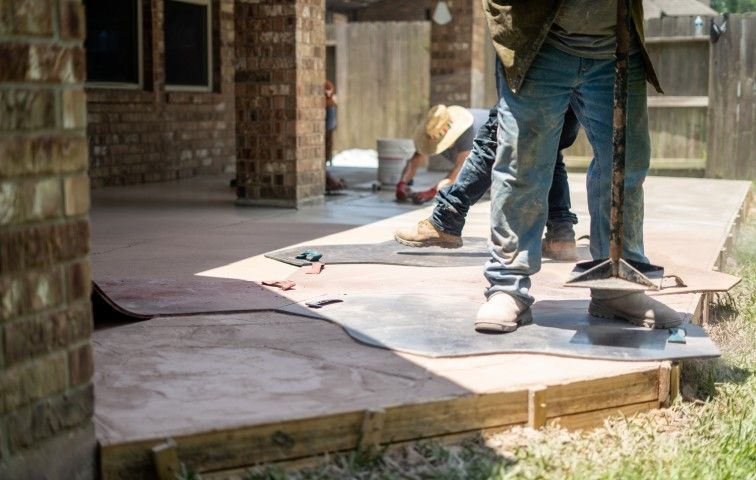

Planning a concrete project can bring up more questions than expected. How thick should a driveway be? Does cracked concrete need to be replaced, or can it be repaired? Is reinforcement necessary? What type of finish makes sense for a patio? At Mustang Concrete Contractor, we help homeowners and businesses understand those decisions before work begins.
We provide concrete services throughout Mustang, Oklahoma for new construction, property improvements, replacements, and repairs. The appropriate approach depends on much more than the size of the project. Soil conditions, drainage, expected loads, existing concrete, site access, and the way the finished surface will be used all influence how the work should be planned.
Central Oklahoma's clay-rich soils add another consideration. Changes in moisture can cause clay soils to expand and contract beneath concrete. Combined with hot summers, severe storms, occasional freezing weather, and substantial temperature swings, these conditions make good site preparation particularly important.
Our concrete services include:
- Residential Concrete
- Commercial Concrete
- Decorative & Stamped Concrete
- Concrete Slabs & Foundations
- Concrete Driveways
- Concrete Patios
- Walkways & Sidewalks
- Concrete Repair
Concrete Solutions Built Around the Property
Concrete isn't a one-size-fits-all building material. A backyard patio supporting furniture, a grill, and foot traffic shouldn't automatically be designed exactly like a driveway carrying vehicles every day. A commercial slab may have entirely different requirements depending on equipment, traffic, drainage, and intended use.
That's why we start by understanding what you're actually trying to accomplish.
Mustang includes established neighborhoods around the older portions of the city as well as newer residential development extending toward Oklahoma City and Yukon. There are also larger properties around the edges of the community where access, drainage, and existing grades can look very different from a typical subdivision lot.
Some projects involve removing concrete that has cracked or settled after years of use. Others begin with undeveloped areas where the elevation, drainage, and supporting base need to be established from the beginning. A driveway extension beside an existing home presents different challenges than pouring a detached shop slab on a larger property.
Before recommending an approach, we consider the condition of the site, how water moves across the property, how the concrete will be used, and whether there are existing problems that could affect the new installation.
Why Proper Concrete Installation Matters
Most of the important work on a concrete project eventually becomes invisible.
Once a driveway or patio is finished, you can't see how well the material underneath it was prepared and compacted. Reinforcement becomes hidden inside the slab. Improper drainage may not become obvious until Mustang receives a heavy storm, and inadequate joint placement may not show its consequences until the concrete has gone through months of shrinkage and temperature changes.
Those details can have a major effect on long-term performance.
Concrete naturally shrinks as it cures and responds to changes in temperature and moisture. At the same time, the soil supporting it can move. Central Oklahoma's expansive clay soils can swell as they absorb moisture and shrink during dry periods. Proper preparation can't eliminate every possibility of movement or cracking, but it can reduce avoidable problems and give the slab more consistent support.
We focus on the parts of the installation that still matter years after the concrete truck leaves.
- Site Preparation: Existing concrete, vegetation, unsuitable material, and other conditions may need to be removed or addressed before forming begins.
- Base Preparation: A properly prepared and compacted base helps provide more consistent support beneath the slab and reduces the likelihood of isolated areas settling differently from the rest.
- Drainage & Grading: Concrete changes how water moves across a property. The finished surface needs to direct runoff toward an appropriate area rather than trapping water beside the home or sending it somewhere that creates a new problem.
- Reinforcement: Depending on the application, reinforcing steel or other reinforcement can help keep sections of a slab together if cracking occurs. Reinforcement doesn't make concrete incapable of cracking.
- Control Joints: Concrete shrinks as it cures. Properly located control joints create planned locations where shrinkage cracks are more likely to develop rather than allowing the slab to crack randomly.
- Proper Finishing: The finish affects more than appearance. Texture influences traction, while finishing practices and timing can affect the quality of the surface itself.
Our Concrete Project Process
Knowing what will happen on your property makes a construction project considerably easier to plan around. The exact sequence depends on the project, but most concrete work follows several basic stages.
- Project Evaluation: We discuss what you're trying to build, replace, or repair and evaluate the proposed work area. This gives us an opportunity to identify drainage concerns, elevation changes, equipment-access limitations, existing settlement, and other conditions that could affect the project.
- Scope & Estimate: Once we understand the site, we determine what the project is likely to require and provide an estimate. Concrete pricing can be affected by square footage, thickness, demolition, excavation, base preparation, reinforcement, finish, accessibility, and the complexity of the work.
- Site Preparation: Existing concrete may need to be broken up and removed before excavation and grading begin. The supporting area can then be prepared, forms installed to establish the dimensions and elevations of the slab, and reinforcement placed where required.
- Concrete Placement & Finishing: Concrete is placed within the forms, leveled, consolidated where appropriate, and finished for the intended application. Control joints are also installed or cut according to the design of the slab.
- Curing: Concrete doesn't reach its intended strength the moment its surface becomes hard. It continues gaining strength after placement. The appropriate amount of time before walking, driving, building, or placing heavy loads on the surface depends on the project and conditions.
- Final Review: Once the work is complete, we review the finished project and explain any relevant instructions regarding initial use, curing, sealing, or maintenance.
Residential Concrete Services
Concrete around a Mustang home needs to balance function, appearance, drainage, and durability. We work on residential concrete projects ranging from driveway replacements and extensions to backyard patios, sidewalks, slabs, and repairs.
Concrete Driveways
A residential driveway experiences repeated concentrated loads from cars, pickup trucks, SUVs, trailers, and other vehicles. The areas where vehicles regularly turn, park, or approach the garage can be subjected to considerable stress.
A successful driveway starts underneath the visible surface. The supporting material needs to be properly prepared, the slab needs appropriate thickness for its intended use, and reinforcement and control joints need to be planned before concrete is placed.
Driveway projects can include completely replacing an aging driveway, extending an existing driveway, widening the parking area, adding access to a detached garage or shop, or installing concrete for new construction.
We also pay attention to how the driveway meets the garage, street, sidewalk, and surrounding yard. Poorly planned elevations can create abrupt transitions or cause runoff to travel somewhere it shouldn't.
Concrete Patios
A concrete patio can provide a durable, relatively low-maintenance surface for outdoor dining, grills, furniture, fire features, and backyard entertaining.
For Mustang homeowners, drainage deserves particular attention when a patio is located against the house. Oklahoma thunderstorms can deliver significant amounts of water in a short period, and a large concrete surface changes where that water travels.
The patio should generally be designed so runoff moves away from the structure and toward an appropriate drainage area without creating an uncomfortable slope for normal use.
Homeowners can also choose among straightforward broom finishes and various decorative treatments depending on the appearance, budget, and maintenance expectations for the space.
Walkways & Sidewalks
Concrete walkways can connect driveways, front entrances, backyard patios, side gates, detached garages, shops, and other areas of a property.
When replacing or adding a walkway, we consider its width, elevation, slope, transitions, and surrounding landscaping. A walkway should feel natural to use while still accommodating drainage.
Transitions deserve particular attention. A poorly matched connection between a walkway and driveway, porch, or patio can create an unnecessary trip point even if both individual surfaces are otherwise well constructed.
Decorative & Stamped Concrete
Concrete doesn't have to look like a standard gray driveway.
Stamped concrete uses patterns and textures to create a more decorative surface and can be designed to resemble materials such as stone, brick, or pavers. Color systems, borders, contrasting areas, and other finishing techniques can further change the appearance.
There are tradeoffs worth understanding before choosing decorative concrete.
Stamped and colored concrete generally costs more than a conventional broom finish because additional materials, labor, and finishing steps are involved. Color can vary somewhat between separate pours, and decorative surfaces may require periodic cleaning or resealing depending on the system and the appearance you want to maintain.
Texture also matters. An aggressively textured decorative surface may look attractive but may not be the most practical choice for every walkway, pool-adjacent area, or frequently used surface.
For some Mustang homeowners, those considerations are easily worth the finished appearance. For others, a conventional broom-finished patio or walkway is simpler and more economical. We can explain those differences before you decide.
Concrete Slabs & Foundations
Concrete slabs provide the base for many improvements, including sheds, workshops, detached garages, additions, equipment areas, and other residential or commercial structures.
The requirements depend heavily on what will eventually sit on the concrete.
A small slab supporting a lightweight storage structure has different considerations than one supporting a garage, workshop, or larger building. Thickness, reinforcement, footings, base preparation, utility penetrations, anchor locations, and applicable construction requirements may all change based on the structure.
Soil conditions also matter. With the expansive soils found in central Oklahoma, foundation and structural concrete should be designed around the actual structure and site conditions rather than relying on specifications intended for an unrelated project.
This is one area where determining the requirements before pouring is particularly important. Once a building has been constructed on a slab, correcting an inadequate foundation becomes considerably more complicated.
Concrete Repair
Cracked concrete doesn't automatically mean the entire slab needs to be removed.
Small stable cracks, isolated surface damage, chipped edges, and certain localized problems may sometimes be reasonable candidates for repair. More substantial settlement, widespread deterioration, recurring movement, or significant drainage problems can point to an issue that a surface repair won't solve.
The important question is why the concrete was damaged.
A crack can be filled to improve appearance and reduce water intrusion, but filling it doesn't necessarily stop the movement that created the crack. Likewise, resurfacing deteriorated concrete won't correct a slab that is settling because the material underneath it isn't providing adequate support.
This distinction is especially important around Mustang because soil moisture can change considerably between wet and dry periods.
We evaluate the condition of the existing concrete before recommending repair or replacement. If a repair is unlikely to provide a reasonable result, we'll explain why replacing the affected area may make more sense than repeatedly paying to patch the same problem.
Commercial Concrete Services
Commercial concrete needs to be planned around how the property actually operates.
Depending on the project, that can include sidewalks, parking areas, equipment pads, slabs, dumpster pads, loading areas, entrances, or other concrete surfaces. Traffic volume, vehicle weight, equipment use, accessibility requirements, drainage, and construction scheduling can all influence how the work should be approached.
A surface regularly exposed to delivery trucks or commercial equipment shouldn't automatically be built to the same specifications as a residential walkway.
For businesses, disruption is another practical consideration. Access to entrances, parking, deliveries, employees, and customers may need to be maintained while work is underway. Concrete also needs adequate curing time before being placed into service, which should be considered when scheduling the project.
We account for those operational requirements during planning rather than treating a commercial project like an oversized residential pour.
How Much Does Concrete Work Cost in Mustang?
There isn't a useful single price per square foot that applies to every concrete project in Mustang.
Square footage certainly matters, but it's only one part of an estimate. Two patios with exactly the same dimensions can require substantially different amounts of labor and material if one is easily accessible on level ground and the other requires demolition, significant excavation, drainage work, or concrete pumping because trucks can't reach the backyard.
Factors that commonly affect concrete pricing include:
- Total square footage
- Required slab thickness
- Excavation and grading
- Base preparation
- Reinforcement requirements
- Demolition and disposal of existing concrete
- Concrete quantity and mix requirements
- Pumping or difficult site access
- Standard versus decorative finishes
- Steps, curves, borders, or complex forming
- Drainage considerations
- Connection to existing concrete or structures
Replacement projects also have costs that new installations may not. Breaking up an existing driveway, loading the demolished material, hauling it away, and preparing the area underneath it all require labor and equipment before new concrete can be placed.
A site evaluation provides a much better basis for estimating the project than applying a generic square-foot price without understanding the property.
Planning a Concrete Project in Mustang?
Whether you're replacing a cracked driveway, building a backyard patio, widening an existing parking area, adding a concrete slab for a shop or shed, repairing an existing surface, or planning concrete for a commercial property, we'll help you understand what the project involves before work begins.
Tell us what you're trying to accomplish and what concerns you have about the property. We can evaluate the site, discuss practical options, and explain the factors that will determine the scope of work.
Contact Mustang Concrete Contractor today to discuss your project and request a free, no-obligation estimate.