Stamped Concrete Services in Mustang, OK
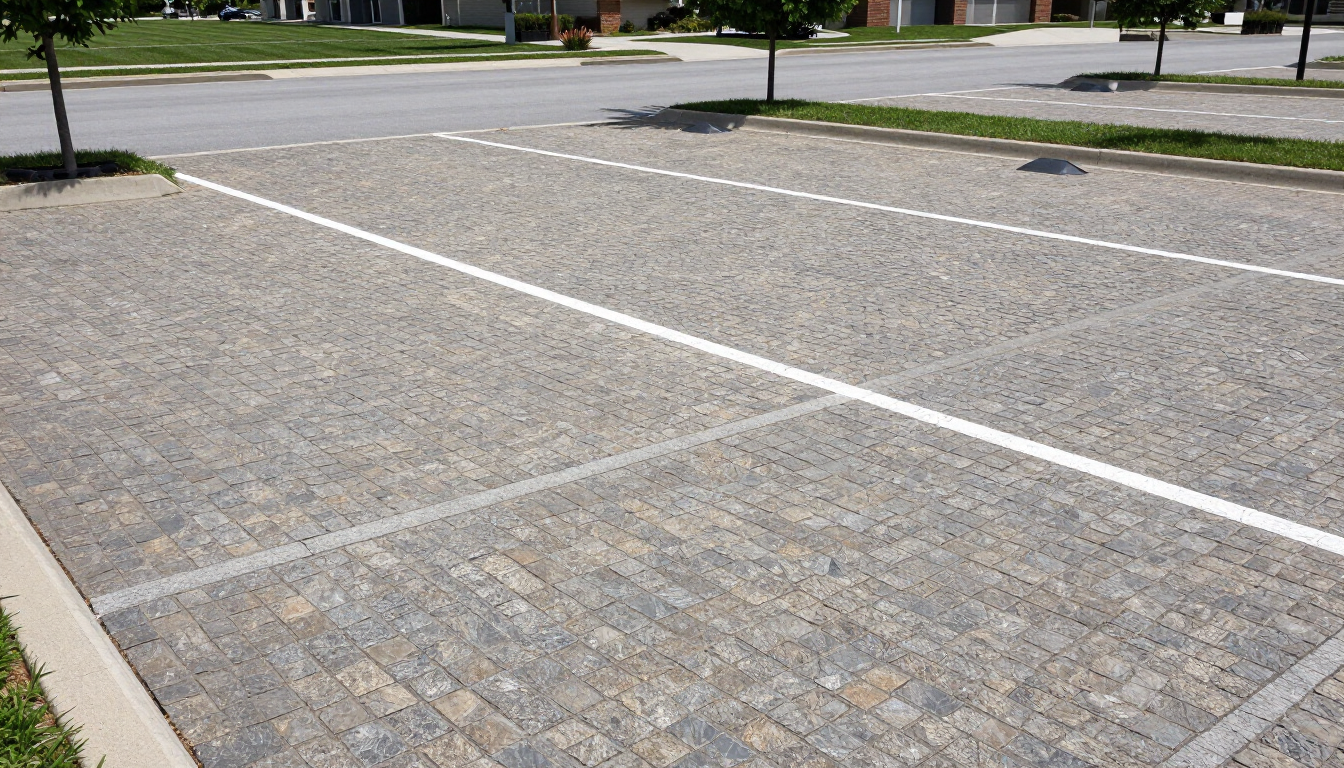

If you like the appearance of stone, brick, slate, or wood but want the continuous surface of poured concrete, stamped concrete can be worth considering. The process combines concrete coloring, textured stamping mats, and finishing techniques to create patterns that resemble other paving materials. Mustang Concrete Contractor installs stamped and decorative concrete for patios, walkways, driveways, entrances, and other outdoor surfaces throughout Mustang, Oklahoma.
Stamped concrete gives homeowners considerably more control over appearance than a standard gray slab, but there are tradeoffs. It costs more than basic broom-finished concrete, typically requires more ongoing maintenance, and the quality of the finished surface depends heavily on installation technique and timing. Oklahoma's intense summer sun, temperature changes, storms, and soil movement are also worth considering when selecting and maintaining an exterior decorative surface.
We help homeowners understand those differences before choosing a pattern or color.
What We Cover:
- Stamped Concrete Patios
- Decorative Driveways & Walkways
- Patterns & Textures
- Concrete Color Options
- Installation & Sealing
- Maintenance Requirements
- Stamped Concrete vs. Pavers
How Stamped Concrete Works
Stamped concrete isn't a separate type of concrete. It's a decorative finishing process performed while freshly placed concrete is still workable.
After the slab has been placed and brought to the appropriate elevation, color and release products can be applied and textured stamping mats are pressed into the surface. Those mats create the joints, texture, and irregularities that give the concrete the appearance of individual stones, bricks, boards, or other materials.
Timing matters considerably.
Concrete becomes progressively less workable after placement, and Oklahoma's summer heat can accelerate that process. Stamping therefore needs to happen during the appropriate finishing window. Starting too early can distort the surface, while waiting too long can make it difficult to create a consistent impression.
Pattern alignment matters as well. A repeating stamp that's slightly misaligned may not be noticeable in one small area, but the error can become obvious when repeated across a large patio or driveway.
Edges, steps, walls, columns, and other obstacles can also require hand detailing because full-size stamping mats won't always fit neatly into those areas.
This combination of timing, pattern alignment, coloring, texturing, and hand finishing is why stamped concrete requires more specialized finishing work than a conventional broom-finished slab.
Stamped Concrete Patterns & Colors
The pattern determines the overall character of the surface, while color and texture determine how convincing and visually interesting the finished concrete appears.
We recommend considering the materials already present on the property rather than choosing a stamped pattern in isolation. Brick, siding, stone veneer, roof color, landscaping, fencing, and surrounding concrete can all influence what looks appropriate.
- Ashlar Slate: Uses rectangular and square shapes with a textured stone appearance. It works particularly well for patios and larger outdoor living areas.
- Flagstone & Random Stone: Creates irregular stone shapes for a less geometric appearance that can work well around landscaping and backyard spaces.
- Cobblestone: Reproduces the smaller, rounded appearance associated with traditional cobblestone paving.
- Brick Patterns: Provides the visual organization of individual bricks without installing hundreds of separate units.
- Wood Plank: Uses elongated stamps with wood-grain texture to create the general appearance of individual boards while retaining a concrete surface underneath.
- Seamless Texture: Adds stone-like or other texture without creating obvious individual units. This can provide a more understated decorative finish.
- Borders & Accents: Contrasting colors or patterns can define the perimeter of a patio, walkway, or driveway without making the entire surface visually busy.
Color is just as important as pattern.
Base coloring establishes the primary tone, while contrasting release colors can remain in recessed areas and emphasize the texture created by the stamps. Browns, tans, charcoals, and different gray tones are common because they coordinate easily with many residential exteriors.
Homeowners should expect some natural variation. Decorative concrete isn't manufactured tile, and a finished outdoor slab may not reproduce a small sample with absolute uniformity. Differences in finishing, curing, sunlight, moisture, and other conditions can affect the final appearance.
That variation can actually contribute to a more natural stone-like appearance, but it's something worth understanding before choosing decorative concrete.
Our Stamped Concrete Installation Process
Stamped concrete begins with the same fundamentals as any properly installed exterior concrete surface.
The site needs to be excavated and graded appropriately, the supporting material prepared, forms installed, and reinforcement incorporated where required. Decorative finishing can't compensate for inadequate preparation underneath the slab.
That's especially relevant in Mustang because central Oklahoma's clay-rich soils can expand as they absorb moisture and shrink during dry periods. Proper preparation can't eliminate soil movement, but providing appropriate and consistent support beneath the concrete can help reduce avoidable problems.
Drainage is equally important, particularly for patios and other decorative surfaces installed next to a home.
Once the concrete is placed, leveled, and prepared for finishing, the decorative process begins. Depending on the selected system, the primary color may be incorporated into the concrete or applied to the surface. A release product is used before stamping to help keep the mats from sticking and may also contribute secondary color.
Stamping mats are then positioned and pressed into the concrete while it remains workable. The pattern is continued across the slab, with edges and difficult areas receiving additional hand detailing as necessary.
After the concrete has hardened sufficiently, excess release material is removed as appropriate and the surface can be prepared for sealing.
Control joints remain important even though the concrete has a decorative pattern. Stamping doesn't eliminate concrete's natural tendency to shrink and crack. Joint locations therefore need to be considered alongside the decorative layout so they can perform their practical purpose without unnecessarily disrupting the appearance.
Where Does Stamped Concrete Work Well?
Patios are one of the most common applications for stamped concrete because the finish can create the appearance of a more elaborate outdoor living area without installing individual stones or pavers.
Stamped concrete can also work well for:
- Walkways
- Front entrances
- Porch areas
- Portions of driveways
- Backyard entertaining spaces
- Outdoor kitchen areas
- Pool-adjacent surfaces when an appropriate finish and traction strategy are used
Driveways deserve additional consideration because vehicle traffic places different demands on the slab.
A decorative driveway still needs to be designed as a driveway first. Base preparation, concrete thickness, reinforcement, control joints, drainage, and expected vehicle loads shouldn't be compromised for appearance.
Stamped concrete also isn't necessary everywhere.
If a backyard walkway is largely hidden or an area primarily serves a utilitarian purpose, paying for decorative finishing may provide little practical benefit. Some Mustang homeowners choose stamped concrete for the main patio or front entrance while using conventional broom-finished concrete for side-yard walkways, equipment areas, and less visible surfaces.
That can be an effective way to concentrate the project budget where appearance actually matters.
Stamped Concrete vs. Pavers
Stamped concrete and concrete pavers can produce similar visual styles, but they're fundamentally different systems.
Stamped concrete is poured as a continuous slab. There aren't individual paving units that can shift independently, and weeds generally don't grow through individual joints in the same way they sometimes can between poorly maintained pavers.
Pavers have advantages of their own.
Individual damaged pavers can often be removed and replaced. If underground utility work becomes necessary later, an affected section of pavers may be removed and reinstalled. Their segmented construction can also respond differently to certain types of ground movement.
That distinction can be worth considering in Mustang because of the movement associated with expansive clay soils. Neither material is immune to problems when the supporting soil moves, but they may respond differently.
Repairing stamped concrete can also be more difficult to disguise. A repaired section needs to match not only the elevation and texture of the existing surface but also its pattern, color, secondary coloring, sealer, and years of weathering. A technically successful repair may therefore remain visually noticeable.
Cost varies with materials, pattern, site preparation, project size, access, and complexity. Stamped concrete shouldn't automatically be described as cheaper than pavers or natural stone in every situation.
The better choice depends on which characteristics matter most for the particular project.
Does Stamped Concrete Crack?
It can.
Stamping concrete changes its appearance. It doesn't change the fundamental behavior of concrete itself.
All exterior concrete has the potential to crack as it shrinks during curing, experiences temperature changes, and responds to movement in the material underneath it.
This is especially worth understanding in Mustang. Central Oklahoma experiences intense summer temperatures, occasional freezes, wet periods, drought conditions, and changes in soil moisture. Expansive clay soils can swell and shrink as those moisture conditions change.
Good installation is about managing those forces rather than pretending they don't exist.
Proper site and base preparation, reinforcement where appropriate, drainage, and correctly located control joints can help manage movement and encourage shrinkage cracks to occur in planned locations.
No contractor can truthfully guarantee that an exterior stamped concrete slab will never develop a crack.
One disadvantage of decorative concrete is that cracks and repairs can be more visually noticeable because the surrounding surface has a specific pattern and color. That's another reason the preparation underneath stamped concrete deserves as much attention as the decorative work on top.
Maintaining Stamped Concrete in Oklahoma
Stamped concrete generally requires more attention than an ordinary broom-finished slab if you want to preserve its decorative appearance.
Routine cleaning removes dirt, leaves, and organic material that can discolor the surface. Spills should be cleaned reasonably quickly, and harsh chemicals should be avoided unless they're specifically appropriate for the concrete and sealer being used.
Periodic resealing may also be recommended.
Sealer can help protect the decorative surface and influence its appearance, but it isn't permanent. Mustang's strong sunlight, weather, foot traffic, vehicle traffic, and normal use gradually wear a sealer down.
How frequently the concrete should be resealed depends on its actual exposure and condition rather than an arbitrary schedule. A covered patio and an exposed decorative driveway don't experience the same amount of wear.
Sealer selection also matters for traction.
Some decorative surfaces can become slippery when wet, particularly when certain glossy sealers are used. That's an important consideration for patios, walkways, entrances, and pool-adjacent surfaces.
Appearance shouldn't come at the expense of creating an unnecessarily slippery walking surface.
How Oklahoma Sun Affects Decorative Concrete
Mustang homeowners should also consider the amount of sunlight a decorative surface receives.
An uncovered patio or driveway may spend much of an Oklahoma summer exposed to direct sunlight and high surface temperatures. Over time, ultraviolet exposure and normal weathering can change the appearance of some coloring systems and sealers.
That doesn't mean stamped concrete shouldn't be used in sunny locations. It means color selection and maintenance expectations should account for the environment.
Very dark surfaces can also become noticeably hot in direct summer sun. If a patio will frequently be used barefoot or receives full afternoon sun, appearance isn't the only consideration when choosing a color.
A color that looks attractive on a sample board should also make practical sense for where the concrete will actually be installed.
What Does Stamped Concrete Cost?
Stamped concrete generally costs more than standard broom-finished concrete because the decorative process adds materials, labor, and time.
Factors affecting the final price can include:
- Total project size
- Site preparation
- Demolition of existing concrete
- Access to the work area
- Slab thickness and reinforcement
- Pattern complexity
- Number of colors
- Decorative borders
- Curves and unusual shapes
- Steps and vertical surfaces
- Hand detailing
- Sealer system
A relatively simple single-color stamped patio generally requires less decorative work than a project using multiple colors, contrasting borders, complicated patterns, and extensive hand detailing.
If you're working within a particular budget, decorative concrete doesn't necessarily have to be an all-or-nothing decision.
A stamped main patio combined with conventional concrete walkways may make more sense than stamping every surface. A decorative border can add visual interest to a broom-finished slab without paying for a full stamped treatment.
We can discuss which decorative features are likely to make the biggest difference and where simplifying the design could reduce unnecessary cost.
Considering Stamped Concrete in Mustang?
Stamped concrete can be a good option when you want the strength and continuity of a concrete slab but prefer something more visually distinctive than a traditional gray finish.
The important part is understanding what you're buying. Stamped concrete costs more, requires more specialized installation, may need periodic resealing, and can be more difficult to repair invisibly than conventional concrete. In exchange, it offers considerably more flexibility in pattern, texture, and color.
Whether you're considering a stamped patio, walkway, driveway, entrance, or another outdoor surface, we'll help you compare the available options and explain how your choices affect installation, maintenance, appearance, and price.
Contact Mustang Concrete Contractor today to discuss your stamped concrete project and request a free, no-obligation estimate.